
The Denim Story: What I Carry Forward
Three chapters ago I stood in a street in Genoa looking for a fabric that isn't there anymore, only its name. Since then I've told you about a tailor in Reno who fixed a torn pocket and accidentally founded an industry, and about a small town in Japan that quietly kept a dying weaving method alive while the rest of the world moved on to something faster. Four countries, roughly a hundred and fifty years, and one piece of cloth running through all of it. I wanted to close this series by telling you what I actually do with all of that - because history is only interesting to me if it changes how I work today.

The first thing this chain taught me is that nothing in denim was ever really invented from nothing. Genoa didn't invent workwear cloth out of thin air, it adapted what sailors and traders needed from what was already being made around the Mediterranean. Nîmes didn't invent denim, it tried to copy Genoa and ended up with something new by accident. Jacob Davis didn't invent rivets, he borrowed an idea from cargo strapping and applied it to a pocket. Japan didn't invent shuttle-loom weaving, they inherited it from a fabric that America was actively discarding. Every part of this story is someone taking what came before, respecting it enough to hold onto the parts that worked, and changing the one thing that needed to change. That's not a bad description of what I try to do at FIVE POCKET every day. I'm not interested in claiming I invented anything. I'm interested in being one more link that takes the chain seriously.
The second thing is about credit, and this is the part that sits with me the longest. Somewhere in this story, the fabric stopped being anonymous. Nobody remembers the name of the Genoese weaver, but everybody knows the name Levi Strauss. That's not necessarily wrong - Strauss and Davis took a real risk and deserve real credit for it - but it does mean the story we tell about denim quietly erases most of the hands that actually made it possible. I think about that every time I talk about fairness as one of FIVE POCKET's core values. It would be easy to make fairness about wages alone, and wages matter enormously. But I think it's also about not letting the story of a garment become the story of only the person whose name is on the label. Every jean we make has more hands in it than mine, and I'd rather run a brand that remembers that than one that simply repeats the Levi Strauss playbook of turning a communal craft into a single founder's myth.
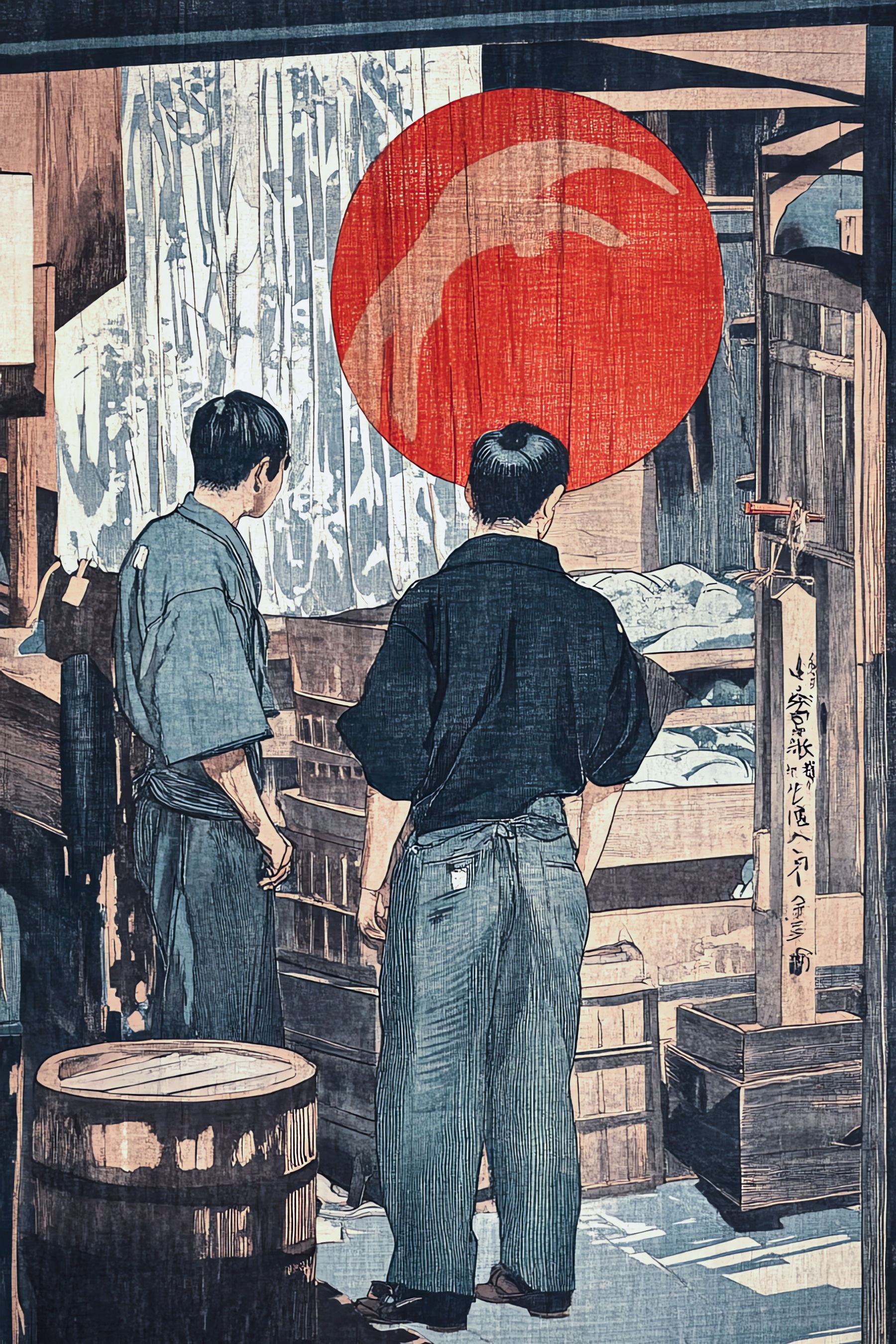
The third thing is the hardest one to hold onto in practice, and it's the lesson from Japan: doing the slow thing on purpose, especially when nobody's watching and there's no short-term reward for it. Kojima's mills weren't trying to win anything in 1975. They were betting that the difference between a shuttle-loom weave and a projectile-loom weave would still matter in fifty years, long after the cost savings of the fast version had been forgotten. I think about that bet every time a faster or cheaper option is sitting right in front of me at FIVE POCKET, because the honest truth is that the faster option is almost always sitting right in front of you. Long-term thinking isn't a value you get to feel good about in the abstract. It's a specific, repeated decision to take the harder road when the easier one would be perfectly defensible.
So that's what four hundred years of one blue fabric taught me: build on what came before instead of pretending you started it, give credit further back than feels necessary, and choose the slow, right way even when nobody's going to notice for twenty years. I didn't set out to write a four-part history lesson when I started FIVE POCKET. But every pair of jeans I make is still standing on the shoulders of a Genoese sailor, a Reno tailor, and a handful of stubborn mills in Kojima - and I'd rather build something that's honest about that than something that pretends to have started the story itself.