
Selvedge as a Cultural Symbol - More Than a Red Line
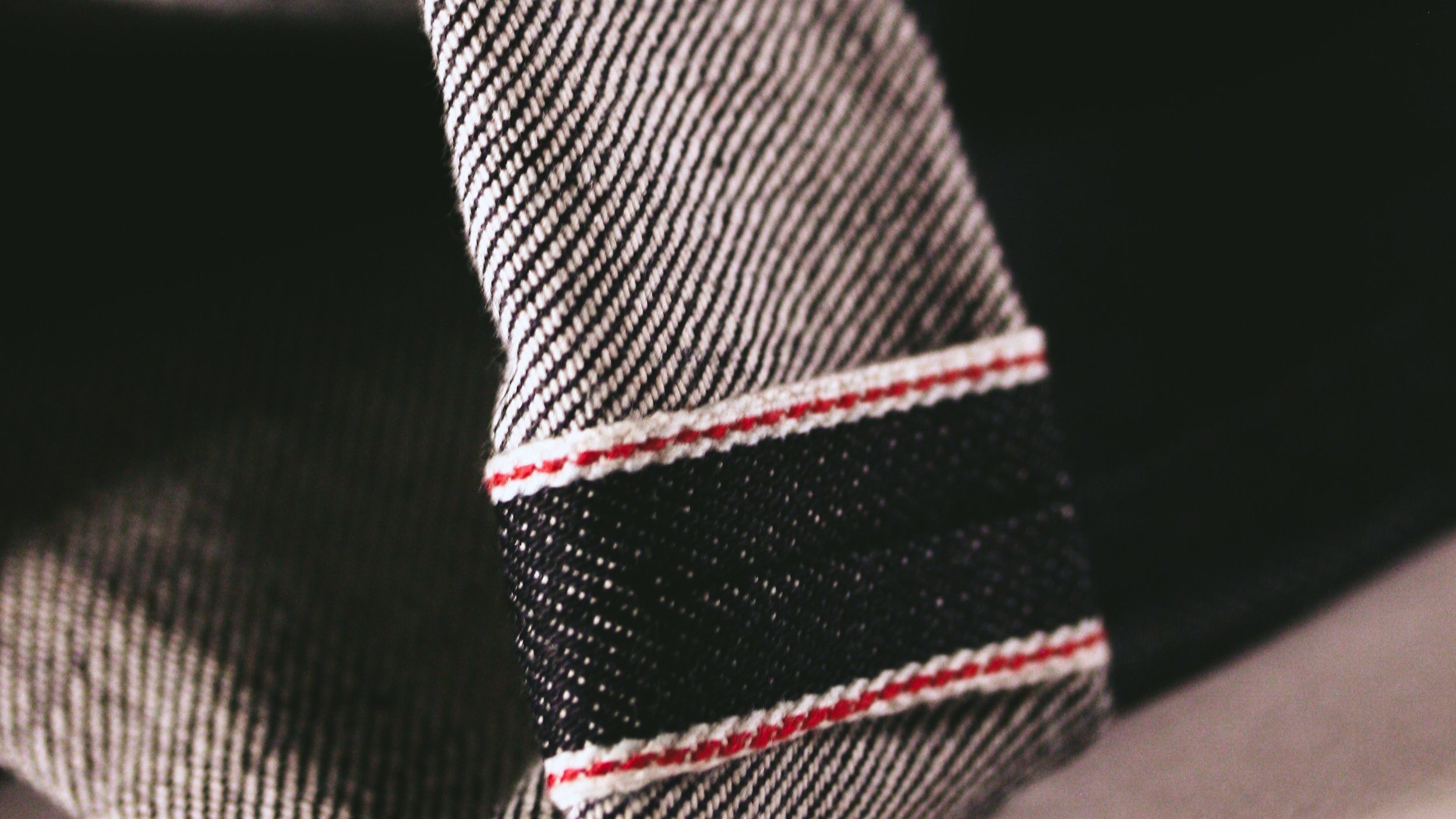
Selvedge denim is often recognized instantly by its clean, tightly woven edge - the famous “red line.” But to call selvedge merely a design feature is to miss 99% of its significance. Selvedge is not decoration. It is identity. A cultural marker. A symbol of craftsmanship, purity, and connection to a lineage of makers who refused to compromise. Today’s chapter uncovers why selvedge became one of the strongest cultural symbols in the denim world - and how a simple woven edge carries more history than most garments could ever claim.
What Selvedge Actually Is - and Why It Exists
The term selvedge comes from “self-edge” - the tightly woven edge created naturally when denim is produced on shuttle looms. These looms: weave fabric more slowly, use a continuous weft yarn, create a clean, sealed edge that does not fray and produce narrower fabric rolls (28–32”). Before the 1950s, all denim was selvedge denim because shuttle looms were the only technology available. The “red line” (or white/blue/green line) came later - a simple way for mills to identify their fabric. But the edge itself - that clean, sealed border - is the true heritage.
As mass production took over, mills switched to modern projectile looms: faster, cheaper, wider (60”+), non-selvedge and lower craftsmanship. Selvedge nearly disappeared. This is why the edge matters: It represents a lost world.
The Selvedge Edge as a Symbol of Craftsmanship
Selvedge became a cultural symbol because it proves the denim was made with: a slower weaving process, a higher cotton quality, more structured weave and intentional, artisanal production When the world moved toward fast, easy, and cheap - selvedge stayed loyal to tradition.
This made it a symbol of:
1. Integrity - Selvedge says: I was made with care.
2. Time - It takes longer to weave a meter of selvedge denim than most people spend shopping for jeans.
3. Human touch - Vintage shuttle looms must be adjusted by hand. Operators hear, feel, and read the fabric.
This deep relationship between craftsperson and textile is embedded in every centimeter. For many denim lovers, selvedge is the signature of authenticity - proof that the garment carries its heritage proudly and visibly.

The Red Line - A Stripe That Became a Movement
The colored ID lines on selvedge seams - especially the classic red line - were originally used by American mills like Cone Mills White Oak to identify rolls of fabric on warehouse shelves. It was never intended as a fashion feature. But Japanese mills saw its symbolic potential. When Japan revived shuttle loom production in the 1970s–80s, they kept the red line alive - preserving it as a visual tribute to American denim’s golden era.
Over time, these lines became coded symbols:
Red line → tribute to Levi’s
Blue line → tribute to Lee
Green line → tribute to Wrangler
Pink line → Momotaro
Gold line → limited editions
The edge turned into a badge - a discreet sign among denim enthusiasts. A quiet handshake between insiders.
Selvedge in Japan - A Cultural Adoption, Not a Copy
When America abandoned shuttle looms, Japan adopted them. But Japan didn’t imitate American denim - they elevated it. They merged: samurai craftsmanship, monozukuri philosophy (mastery through making) and centuries of indigo tradition. Selvedge became a vessel for deeper Japanese values:
Respect for heritage - Honoring the past is central to Japanese craft.
Dedication to mastery - Shuttle loom weaving requires patience and precision.
Beauty in imperfection (wabi-sabi) - Selvedge fades with personality, not perfection.
Relationship between object and owner - Your fades tell your story, a shared journey.
Japan didn’t just preserve selvedge denim. They spiritualized it.

Selvedge as Cultural Expression Today
The selvedge edge became more than a technical detail - it became a cultural identity with multiple meanings:
A marker of authenticity - Among denim enthusiasts, showing the selvedge ID line is like showing craft credentials.
A symbol of slow fashion - It connects wearers to the anti-fast-fashion movement.
A personal signature - No two selvedge fades are alike, the fabric records your life.
A status symbol - Not in a luxury sense, but in a craft appreciation sense. A way to say: I choose quality.
A connection between generations - Many wearers pass selvedge jeans to children. The fades become a family story.
Selvedge carries meaning because it survives where everything else is disposable.
How Selvedge Shapes Modern Denim Culture
Selvedge today influences:
raw denim communities
vintage reproduction brands
high fashion (e.g., Dior Homme Era Hedi Slimane)
heritage workwear
sustainable craft movements
It continues to stand for:
slower living
deeper meaning
identity through wear
appreciation for imperfection
Selvedge is proof that small details matter.
This Story Goes Much Deeper
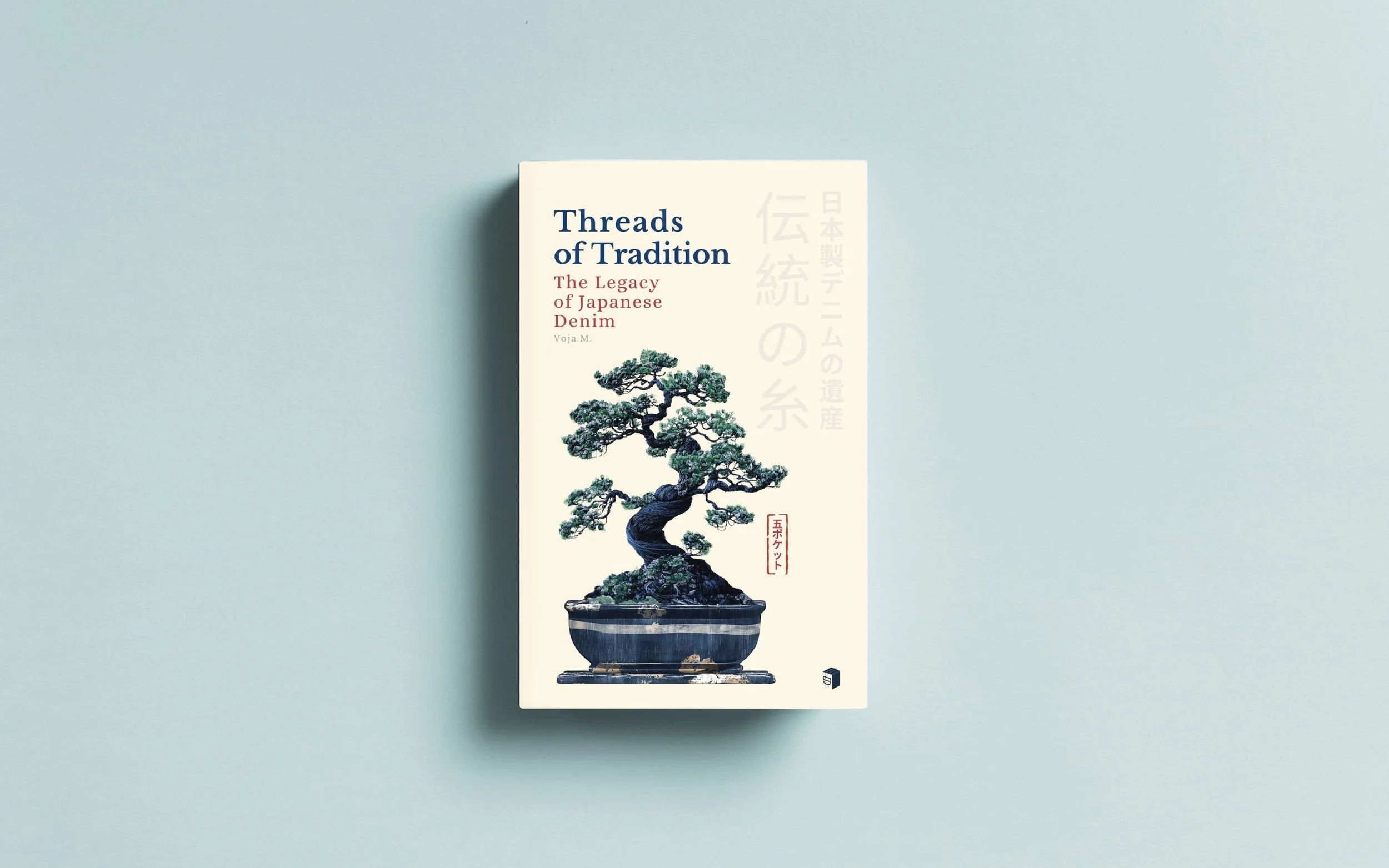
This blog post offers the essentials - but the full story of selvedge as a cultural symbol is explored in far greater depth in, the book Threads of Tradition: The Legacy of Japanese Denim takes you deeper into this world than any article ever could.
Inside the book, readers will discover:
meaning behind colored selvedge IDs
the philosophy behind raw denim culture
why Japan became the world’s denim capital
Explore the full world:
🔗 Amazon - Paperback & Kindle